
by Nanny Aut
My mother and I don’t have a good relationship – looking back I’m not sure we ever did. There is a lot of hurt and resentment built up on both sides over the years.
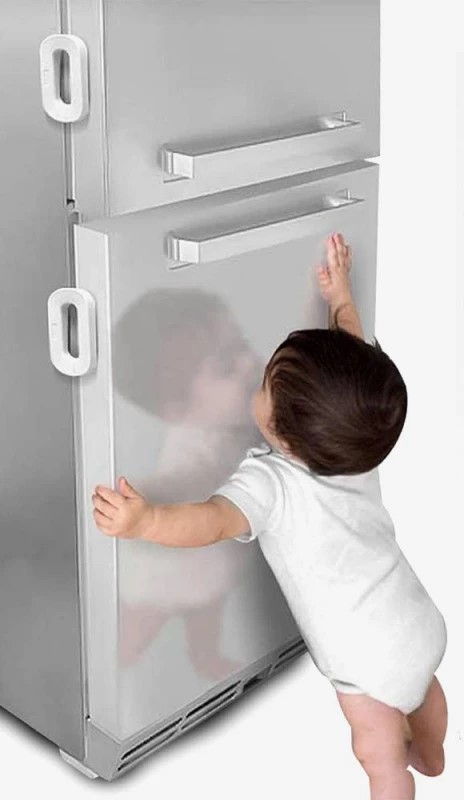
To an external observer my mother would classify as a ‘refrigerator mother’. To an external observer, my autistic traits might be assigned to the trauma of having a parent I couldn’t connect with.
They would be wrong.
The story is far more complex and the ‘refrigerator’ presentation is a consequence not a cause of being autistic.
And it’s not that my mother wasn’t loving – she just had no idea to show it in a way that I could receive it. No understanding of how to connect with someone who did not seek connection in expected ways. Made worse by believing the parenting manuals of the time. Manuals that taught that enforcing compliance and conformity was the best way to help your children get a great future.
Being an undiagnosed autistic themselves with high levels of RSD (rejection sensitive disorder) parenting was a challenge.
From the moment I was born, she was marked a failure – both sides of the family announced their disappointment I wasn’t a boy.
Then she felt rejection from me. Even as a very small baby I was tactile averse and fought and screamed against any attempt to cuddle me. This was compounded by the fact I overheated easily, so body heat from others rapidly became unbearable. Only when I was swaddled and solo did I settle.
All those connection points that the manuals suggested – massage, bathing, tactile play only elicited fury from me. Tactile averse.
I appeared to be communicating over and over ‘Leave me alone, I don’t want you.’
And this was reinforced by the health visitors, who made repeated criticisms of my mother for not cuddling me more. So I was making her look to be a ‘bad mother’ to others.
When she saw me, she saw shame, guilt and failure.
Hard to feel affection when those feelings are swamping you.
And that’s before we get to her own sensory challenges.
A screaming baby – I screamed a lot – not just in protest, but in pain, I had a lot of colic. Almost certainly genetic diverticulosis causing painful overstretched gas balloons in my gut. And that crying caused her massive sensory distress and anxiety.
And she is extremely smell sensitive and texture averse to slimy textures. So natural baby emissions were a real problem.
And if you don’t know that it’s a sensory issue, it can be easy to confuse sensory aversion to aversion to the child.
Cue overwhelming guilt – because she couldn’t connect with this screaming, smelly, slimy alien who apparently hated her on sight. She was supposed to feel overwhelming love but instead only felt suffocating obligation.
Things didn’t get better as I grew.
I naturally gravitated to parallel play not interactive play. To an external observer this looked like I wanted to be alone.
I didn’t – I very much didn’t – so much so that if I was left alone to play I would scream until I was physically sick. Which would cause my Mum to return. In time I learnt to put my fingers down my throat to gain what I needed.
Until a Doctor pointed out that that was what I was doing and told my Mum not to let me manipulate her like that. From then on, if I was sick, I was left cold and wet to ‘learn my lesson’. On professional advice.
The same way she was told to ignore my tantrums if I didn’t get what I wanted (needed). To teach me a lesson.
And I did learn – I learnt I was on my own – that my Mum wouldn’t come if I needed her. Wouldn’t help me, wouldn’t protect me. I learnt to never ask for help again.
And this need for parallel play very much felt like rejection to my mother. At playgroup she was told to interact with me – ‘children need that’. And in front of judgemental eyes I made it very clear that interaction was not wanted. Other children happily playing with parents and peers, me to the side doing my own thing.
Observing, exploring, experimenting – all without the added processing overload of social interaction.
As I grew, so did the shame. Repeated comments on her abnormal child who couldn’t socialise properly.
Our only interactions cycled around her fixing me, teaching me to be ‘normal’. Trying to instill in me the social rules that she herself had struggled with growing up. Telling me over and over that who I was was unacceptable that I needed to be someone else to be allowed to belong. Intentionally withholding approval, because the manuals said that a validated child was a child who stopped trying and would fail in life. You needed to keep approval just out of reach so the child would keep striving and stretching for it.
All I knew I was a failure in her eyes, a defective reject that she would have returned if she could have. I could get nothing right. I talked too much/ too little. I was too loud/ too quiet. I couldn’t even get topics of conversation right. My scripts, learnt carefully from adults, were ‘too adult’. My emotions were ‘too childish’.
Every day she would ask if I made friends and I would say no. And we would dissect my actions and errors.
I was sent to remedial speech to cure my monotone. I was sent to dance to make me graceful and no longer clumsy.
And I tried my best to get it right – failed miserably – and was told I wasn’t trying hard enough.
By ten they gave up – they sent me away to boarding school – believing that the school could succeed in giving me a future where they had failed. To me, this just confirmed the ‘return the reject’ theory – ship me off out of their life. Whenever I went home, I made myself as small and unobtrusive as possible, hiding in my room with a book. Minimising conversation and connection. Which in turn, made my mother feel rejected causing them to pull away even further.
By eighteen I was tired of trying for approval, I gave up and left – wanting nothing more to do with a family who clearly didn’t want me. Overt rejection for my mother.
It took years to lose the anger, to reach an arm’s length connection of wanting well for them but wanting nothing from them.
And honestly, as a grown adult, I still have that small child craving for approval. To have a parent who likes me and enjoys my company.
I know it’s a fantasy – that boat sailed long before I was even aware there was a boat. It doesn’t stop me wishing.
And should the miracle happen – should they apologise for getting it wrong – should they make an effort to get it right – should they tell me of even one thing I’ve done that they were proud of – I would open my arms to a connected relationship. I would struggle to trust it was permanent but I would still embrace it.
And the worst of these decades of absent relationship is it didn’t need to happen this way.
My mother is a good person who desperately wanted to love me – but didn’t know how to show it.
Who knew nothing about autism or autistic needs and how to meet them.
Who devotedly followed professional and societal advice, believing that those outsiders knew better than her own instincts.
Who was so busy masking herself and ignoring her own sensory needs, she struggled with parenting far more than she needed to.
We could write this off as a ‘That was then, this is now’ story.
Autism was barely on anyone’s radar when I was a child and certainly not for girls.
We know so much more now.
And yet – in parent forums I see the same patterns still emerging. The same mistakes happening. The same bad advice from professionals and society in general being proferred.
I am seeing the same broken relationship dynamic happening still. Seeing into the future and seeing history repeat
And it doesn’t need to – not any more.


100% agree that it doesn’t need to be like this anymore. thank you for putting yourself out there and sharing this I shared the same experience, except my mother was not autistic
LikeLiked by 2 people
My mom tried very hard and did love me, but I always felt that if I wasn’t her daughter she wouldn’t be interested in me at all. I’m an abusive marriage and estranged from her family, she put all her of need for affection and validation on me as a young child – until my sister waa born and then she didn’t “need” me anymore. Ultimately my sister and I as adults have a relationship but Mom kept us so separate as children that I didn’t even know my sister had an ADHD diagnosis in elementary school – our conversations about our mom now have determined she (Mom) was very likely Autistic. There’s a lot of baggage that will never be resolved since she has been debilitated by Parkinson’s Dementia. So many thanks to you for putting your experience out there for people like me to understand we are not alone.
LikeLiked by 1 person